
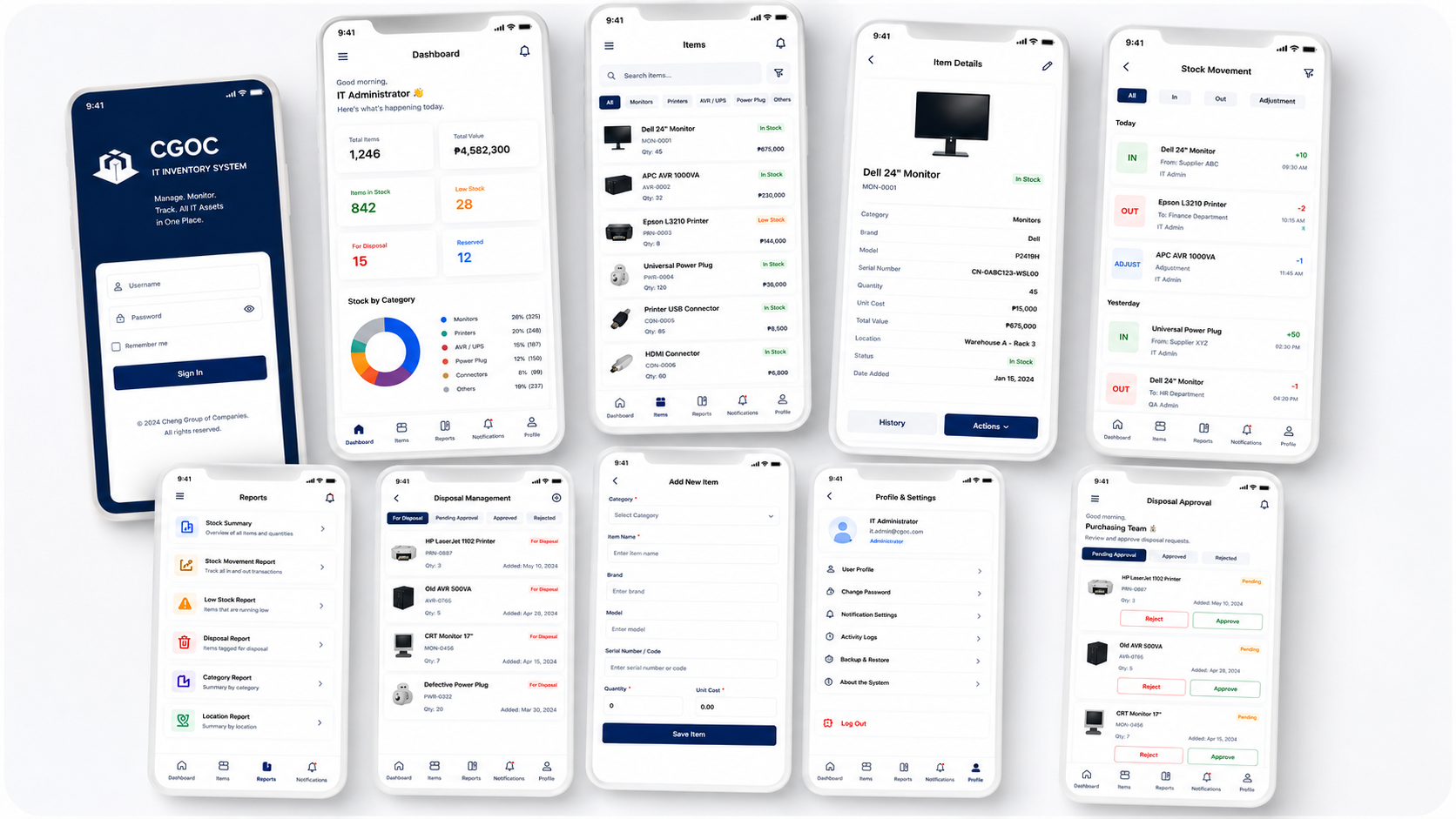
Core Features
Authenticated Access
User authentication protects the shared inventory workspace and its operational records.
Item, Category, and Location Management
Structured records keep equipment, stock quantities, categories, and storage locations organized.
Inventory Movement Tracking
Movement records capture how items enter, leave, or move between locations over time.
Disposal Approval Workflow
IT can submit equipment for disposal while Purchasing reviews and processes each request.
Development Process
The Challenge
Manual inventory tracking can create inaccurate records, missing equipment information, and limited visibility into where items move. The system also needed to support two departments with connected but distinct responsibilities.
The Solution
- Relational Data Design: Structured models connect items, categories, locations, movements, and disposal records.
- API Architecture: Node.js and Express.js routes and controllers provide a clear boundary between the interface and SQL Server data.
- Coordinated Workflow: The interface links day-to-day inventory tasks with the Purchasing department's disposal review process.
- Integration Testing: Authentication, database connectivity, API behavior, and frontend-to-backend flows were tested together.
Key Takeaways
Building the system strengthened my understanding of backend structure, API development, relational database design, debugging, and connecting a working interface to operational data.